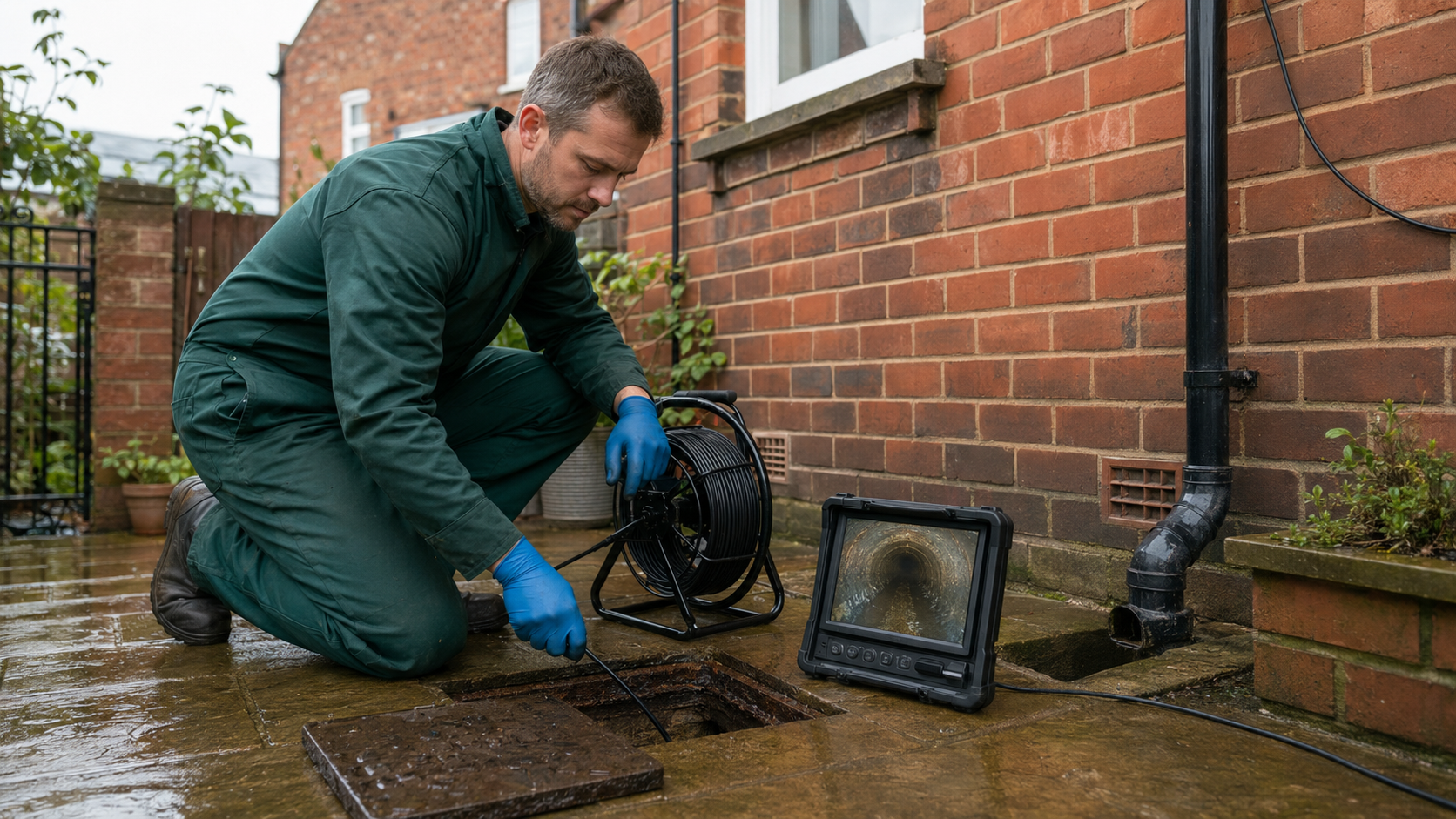
Roots use a fault that already exists
Roots seek moisture. They normally enter through a cracked pipe, failed seal or open joint rather than breaking into a sound sealed drain.
Older clay pipes have many joints, so there are more possible entry points. Ground movement can open those joints over time.
The signs can look like any blockage
Slow flow, gurgling and repeat blockages are common. The problem may be worse after periods of growth or in a run close to mature trees and hedges.
The only clear way to confirm roots inside a drain is a CCTV survey after enough waste has been removed.
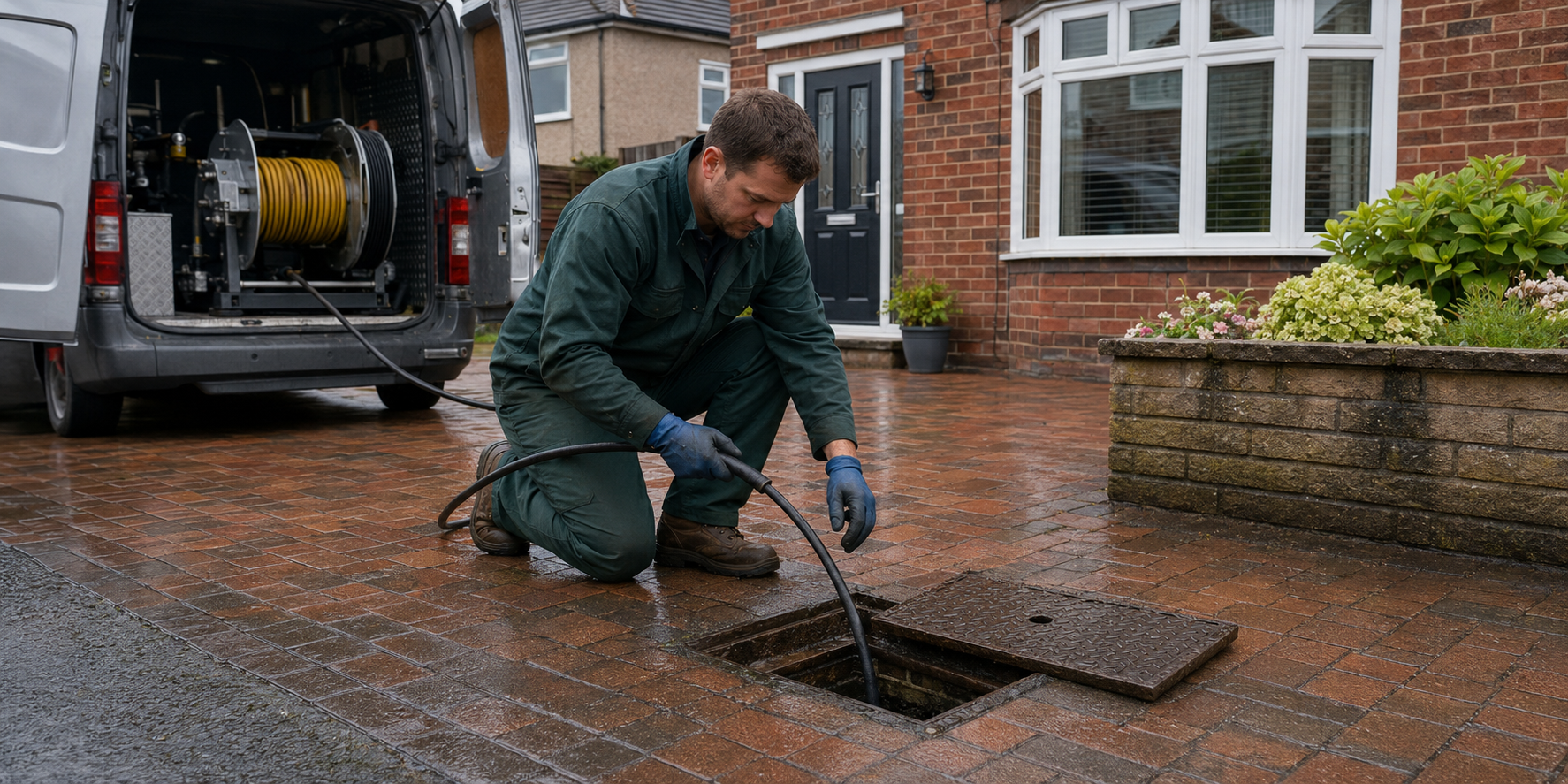
Fine roots catch waste
Small roots form a net across the pipe. Toilet paper, wipes and grease catch on it, building a larger obstruction.
Thicker roots occupy more space and can place pressure on weak joints. The amount of root does not always show how much pipe damage exists.
Cutting restores the opening
Mechanical root cutters match the pipe size and root thickness. Jetting then washes loose growth and trapped waste from the run.
The drain is surveyed again after cutting. This reveals the entry point and confirms whether the pipe is suitable for repair.
Repair helps stop the return route
A resin patch can seal one damaged joint. A longer liner may cover several cracks or entry points. A crushed pipe needs excavation.
Cutting without sealing can still be a sensible maintenance choice where repair is not possible, but the roots may return and need planned checks.
Do not remove a healthy tree without advice
Removing a tree does not repair the drain. It may also affect ground moisture and local stability. Get advice from a tree professional where the tree itself is part of the decision.
Focus first on the pipe defect, the drain's condition and the repair that suits the site.