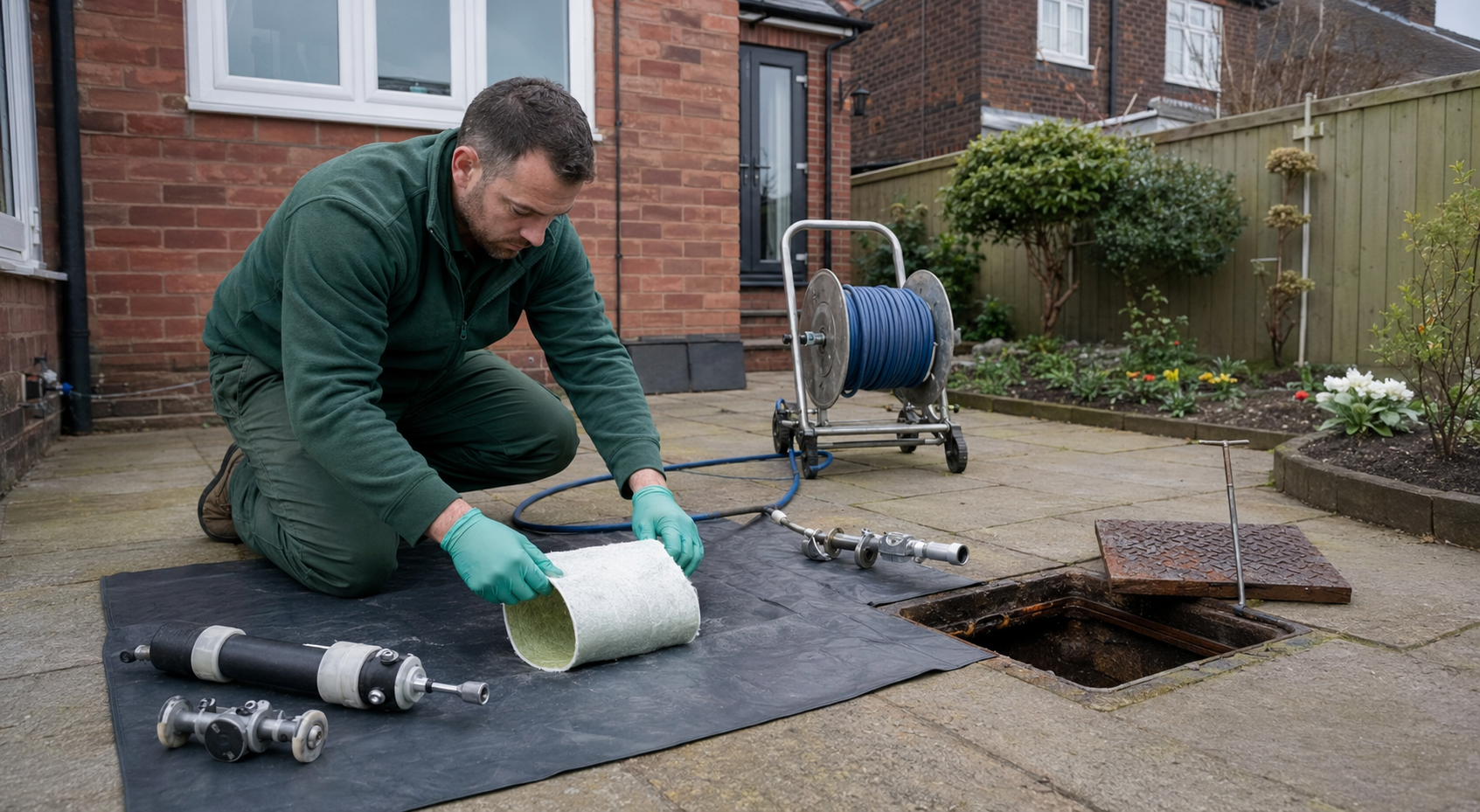
What drain relining does
A resin-coated liner is installed inside the cleaned pipe and cured in place. It creates a sealed inner wall through a cracked or leaking section.
Relining avoids opening the full ground above the pipe. It can protect paving, gardens and internal floors while reducing downtime.
What excavation does
Excavation opens the ground, removes the failed section and installs new pipework. It gives direct access and can correct shape, level or route.
It causes more surface disruption, but it is the reliable choice for pipes that have lost their structure.
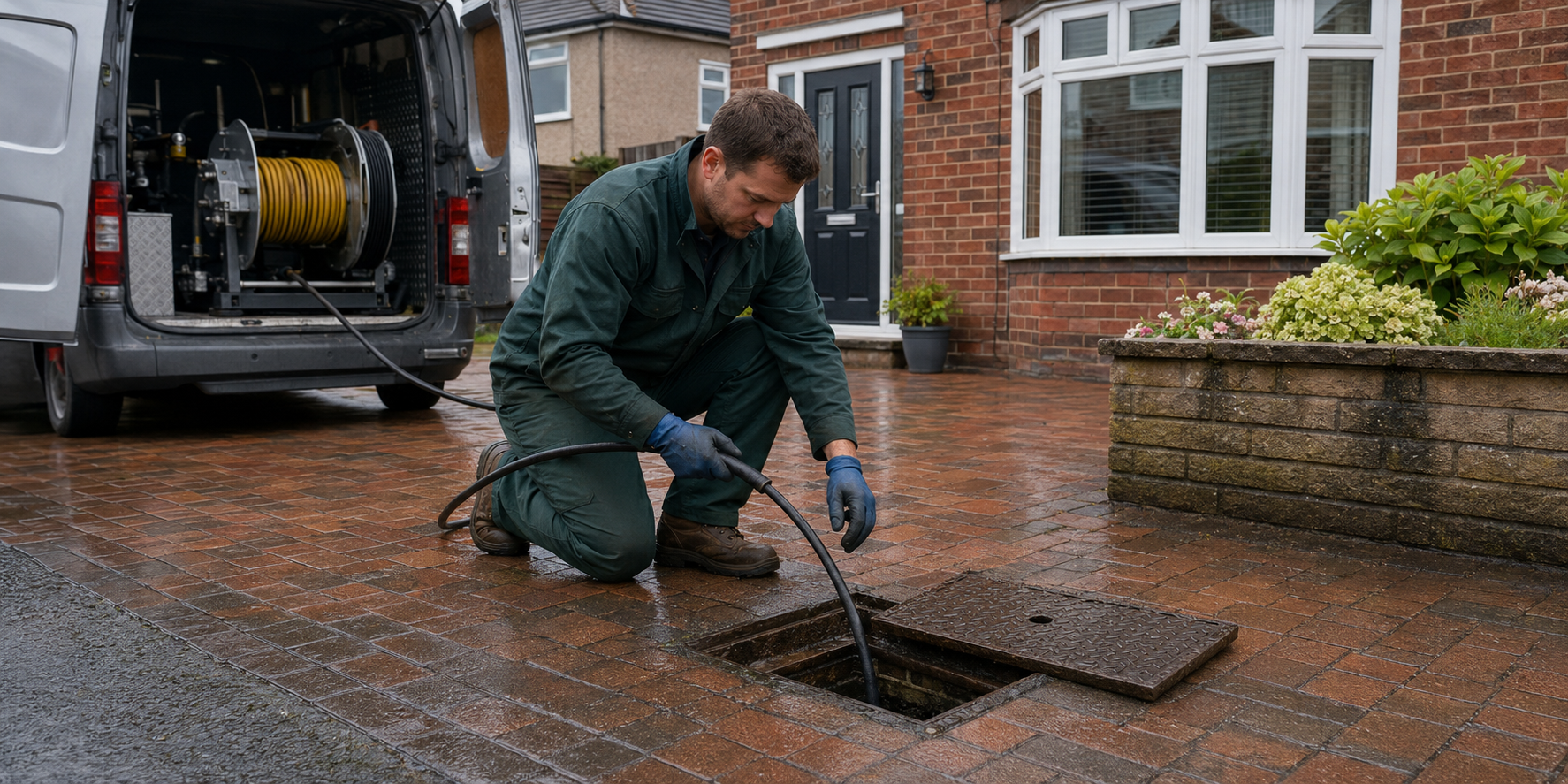
When a no-dig repair is suitable
Relining can work for cracks, leaking joints, several small defects and root entry points after cutting. The pipe must still have a usable shape and enough access for cleaning and installation.
- Cracked but not crushed pipe
- Leaking or open joints
- Local root entry after removal
- Long runs beneath valuable surfaces
- Sites where downtime must be limited
When digging is the better option
A liner follows the shape of the host pipe. It cannot lift a sunken section, open a fully crushed pipe or correct a major backfall.
Excavation is also needed when the drain must be moved, enlarged or connected in a different place.
- Full collapse or crushing
- Severe deformation
- Badly displaced sections
- Wrong levels or major standing water
- A new route or connection
Compare the whole job
Relining may cost more per metre than basic pipe, but it can save on digging and surface replacement. Excavation may be cheaper where the fault is shallow and easy to reach.
Ask for CCTV evidence, the measured defect and the proposed repair length. A clear scope lets you compare lasting outcomes instead of labels.
A combined repair can work
Some sites need one small excavation for a collapsed section and a liner through the remaining cracked pipe. The methods are not rivals when a combined plan reduces disruption.
A final camera survey and flow test should confirm the repair before the drain returns to normal use.